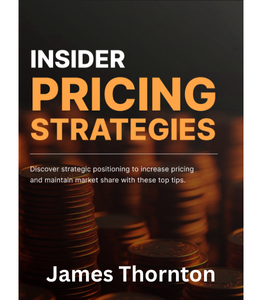
Insider Pricing Strategies
Why This Book Is Listed
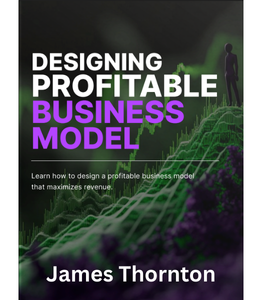
Selected for treating pricing as strategic positioning tool rather than just math, emphasizing customer psychology and value perception over cost-plus calculations or competitor matching.
At a Glance
- Category: Marketing & Sales
- Type: Strategic pricing guide
- Approach: Psychology-driven and positioning-focused
- Reading Style: Direct with case studies
Short Description
A strategic guide to pricing psychology and positioning covering penetration pricing, premium strategies, the B.L.S. Formula, value stacking, USP development, and customer qualification for maximum profitability.
What You'll Learn
- Understanding customer buying psychology through the B.L.S. Formula (Benefits, Logic, Scarcity)
- Implementing proven pricing models including penetration pricing, price skimming, and graduated pricing
- Crafting Unique Selling Propositions (USPs) that differentiate from competitors beyond price
- Using value stack techniques and the GAP strategy to justify higher prices
- Qualifying buyers to reduce refunds, increase satisfaction, and attract ideal customers
- Leveraging social proof, exceptional support, and strategic positioning to build premium brand perception
Who This Book Is For
This book is a good fit if you:
- Struggle with pricing products or services profitably without knowing if prices are too high or too low
- Launch new products and need strategic price positioning guidance from day one
- Experience stagnant growth or low conversion rates possibly linked to pricing strategy
- Compete in crowded markets needing differentiation beyond being cheapest option
- Want to attract customers who value quality and solutions over lowest price
- Need to understand customer psychology driving purchase decisions at different price points
- Recognize that trying to please everyone results in pleasing no one and stagnant growth
Full Description
Pricing strategy functions as more than numbers—it's a powerful positioning tool shaping customer perception and business success. Businesses attempting to please everyone through middle-ground pricing end up in stagnant growth, while focused brands with targeted strategies build loyal customer bases. The B.L.S. Formula reveals customer buying psychology through 3 distinct types: Benefits buyers (emotion-driven seeking solutions to problems, responsive to outcome-focused messaging), Logic buyers (data-focused wanting proof, case studies, specifications before purchasing), and Scarcity buyers (urgency-driven motivated by fear of missing out, limited-time offers, exclusive access). Understanding which type comprises your primary audience enables crafting messages and pricing structures resonating specifically with their decision-making patterns. Strategic pricing attracts ideal customers while repelling wrong-fit buyers who would generate refunds, complaints, and support burden disproportionate to revenue.
Proven pricing models serve different strategic objectives. Penetration pricing uses lower initial prices gaining market share quickly then raising prices as brand establishes, effective for new market entry or disrupting established competitors but requiring careful planning avoiding permanent "cheap" positioning. Price skimming starts premium targeting early adopters willing paying more for new offerings then gradually lowering prices reaching broader markets, maximizing revenue from less price-sensitive segments first. Graduated pricing offers multiple tiers appealing to different customer segments simultaneously—basic, professional, enterprise structures allow customers self-selecting appropriate value levels. Real success stories demonstrate impact: ConvertKit transformed from struggling startup to $24 million business through strategic audience repositioning from "everyone" to email marketing for professional creators, enabling premium pricing justified by specialized features and support rather than competing on cost with mass-market alternatives.
Value perception strategies justify higher prices without changing actual product costs. Crafting Unique Selling Propositions (USPs) differentiates from competitors through specific benefits, approaches, or guarantees others don't offer—the more specific and targeted, the more effective. Value stacking techniques present total package value: bundling complementary items, highlighting bonuses, showing cumulative worth making price appear reasonable compared to perceived value received. The GAP strategy creates perceived value gap between what customers pay versus what they receive, emphasizing return on investment, time savings, problem resolution worth far exceeding monetary cost. Loss leader tactics attract customers through irresistible entry offers then profit from subsequent purchases, backend offers, or upgrades—works when customer lifetime value significantly exceeds initial acquisition cost. Qualifying buyers through application processes, questionnaires, or minimum requirements filters for ideal customers reducing refunds while increasing satisfaction and success rates.
Trust-building mechanisms support premium pricing by reducing perceived risk. Social proof through testimonials, case studies, user counts, media mentions, certifications demonstrates others successfully benefiting from your offering. Exceptional customer support exceeding expectations turns buyers into advocates generating referrals and positive reviews worth more than advertising. Common pitfalls include buyer's remorse from overpromising, unrecognized charges from unclear billing terms, and unmet expectations from vague benefit claims—all preventable through transparent communication and accurate positioning. The foundation remains knowing your core audience precisely: the tighter your target market definition, the easier creating compelling messages resonating with their specific needs, values, concerns. This focus enables attracting ideal customers seeing true value rather than chasing sales through discounting. Success comes from strategic positioning at price points aligning with target customer willingness to pay for specific benefits you uniquely deliver, building sustainable business through customer satisfaction and loyalty rather than volume-based race to bottom competing solely on price.