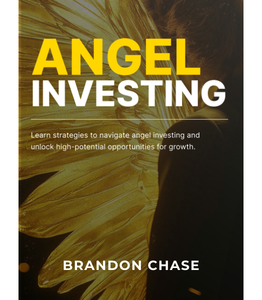
Angel Investing
Why This Book Is Listed
Selected for providing practical implementation guidance on angel investing from deal sourcing through exit, cutting through industry jargon to focus on actionable strategies and real-world examples.
At a Glance
- Category: Finance & Investing
- Type: Strategic investment guide
- Approach: Practical and experience-based
- Reading Style: Direct with case studies
Short Description
A comprehensive guide to angel investing covering startup evaluation, due diligence, deal negotiation, portfolio management, and post-investment engagement for funding early-stage ventures successfully.
What You'll Learn
- Understanding angel investing fundamentals and how it differs from venture capital in investment size, stage, and involvement
- Finding high-potential startups through pitch events, angel networks, and professional connections
- Conducting comprehensive due diligence across financial, legal, market, technical, and team dimensions
- Negotiating investment terms including convertible notes, SAFEs, preferred stock, and valuation methods
- Building diversified portfolios that mitigate risk while accessing high-return potential
- Providing post-investment mentorship, strategic guidance, and connections beyond capital
Who This Book Is For
This book is a good fit if you:
- Have financial stability and want meaningful investment opportunities beyond traditional stocks and bonds
- Are ready to start with smaller investments ($25,000-$100,000) and gradually increase involvement
- Want portfolio diversification with high-return potential from successful startup exits
- Seek personal satisfaction being part of startup journeys from inception to success
- Are willing to commit to 5-10 year investment horizons understanding startups take time to mature
- Want to provide mentorship and guidance beyond just capital to help startups succeed
- Understand that angel investing requires calculated risk-taking, due diligence, and ongoing education
Full Description
Angel investing involves providing capital to early-stage startups in exchange for equity, becoming a key player in promising business growth. The term originated in early 20th-century Broadway where wealthy individuals backed theatrical productions, evolving significantly by the 1970s-1980s as the technology boom created entrepreneurs looking to reinvest success into the next startup generation. Angel investing differs from venture capital in crucial ways: angels typically invest their own money versus pooled funds, investment amounts usually range from $25,000 to $100,000 versus millions for VC firms, angels often get involved at very early stages (sometimes just an idea or prototype) while VCs require more proof of concept, and angels have more opportunity being hands-on mentors while VCs take formal approaches with board seats. Compelling motivations include potential for high returns as successful exits multiply initial investments, portfolio diversification, personal satisfaction from startup involvement, learning about new industries and technologies, and networking with successful investors and entrepreneurs.
Angel investors occupy a crucial position in the funding relay race across startup stages: seed stage involves product development with no revenue funded by angels, early stage represents initial growth seeking angel groups and early-stage VC, growth stage requires expansion funded by larger VC firms, and late stage prepares for exit with private equity. You provide not just capital but guidance and connections, bridging the critical gap between friends-and-family rounds and institutional venture capital. The landscape is evolving through crowdfunding platforms democratizing access, increased focus on impact investing balancing returns with social or environmental impact, globalization of angel networks enabling cross-border investments, emergence of angel syndicates allowing smaller investors participating alongside experienced angels, and integration of AI and data analytics in deal sourcing. Legal considerations include accredited investor requirements varying by jurisdiction, securities regulations requiring compliance, potential conflicts of interest, and maintaining transparency with entrepreneurs and co-investors.
The investment process starts with finding high-potential startups through attending pitch events and demo days, joining angel networks and online platforms, leveraging professional networks for deal flow, and following industry trends. Initial screening uses the 30-60-90 rule: if not interested within 30 seconds of a pitch, pass; if intrigued give 60 seconds more; if still interested invest 90 seconds learning details. You'll evaluate team quality (exceptional teams pivot and adapt while mediocre teams struggle even with great ideas), assess market opportunity size determining if large enough for significant returns, examine product differentiation and competitive advantages, and review business model sustainability. Comprehensive due diligence examines multiple dimensions: financial analysis reviewing projections, burn rate, and runway; legal due diligence examining company structure, intellectual property, contracts, and liabilities; market due diligence validating size assumptions and competitive landscape; technical due diligence for tech startups assessing scalability and team capabilities; team due diligence conducting reference checks and evaluating dynamics.
Negotiating terms requires understanding common instruments: convertible notes (debt converting to equity at future financing), SAFEs (Simple Agreement for Future Equity offering simpler alternatives), and preferred stock (giving certain rights over common stockholders). Determining appropriate valuation balances fair startup pricing with attractive return potential using comparable company analysis, discounted cash flow models, or venture capital methods. Key negotiation points include liquidation preferences, anti-dilution provisions, board representation or observer rights, information rights and reporting requirements, and exit provisions. Post-investment engagement maintains value through regular check-ins and updates, providing strategic guidance and mentorship, making introductions and facilitating partnerships, participating in follow-on rounds when appropriate, and knowing when to cut losses or double down based on performance. The angel investor mindset recognizes you're partnering in the startup's journey requiring patience with typical 5-10 year investment horizons, learning from both successes and failures, giving back through mentorship, and maintaining integrity building reputation as a fair supportive investor.