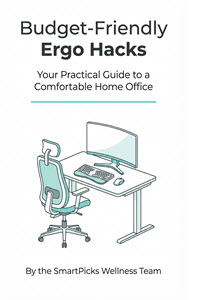
Budget-Friendly Ergo Hacks
Why This Book Is Listed
Selected for its grounded, no-nonsense approach to ergonomics — focusing on principles over products, DIY fixes over expensive gear, and small habit changes that actually prevent pain.
At a Glance
Category: Health & Wellness
Type: Practical guide
Approach: Implementation-focused
Reading Style: Direct, actionable
Short Description
A practical guide to creating a pain-free home office workspace using budget-friendly hacks, DIY solutions, and movement habits instead of expensive ergonomic equipment.
What You'll Learn
- Why prolonged sitting causes pain — understanding spinal curves, static loading, and the head-weight problem
- Five free fixes you can implement today: keyboard tilt, monitor height, lumbar support, movement timers, and foot positioning
- How to make any chair work better with DIY lumbar support, proper seat height, and pressure distribution
- Monitor positioning rules for height, distance, and angle — plus free riser options using household items
- Keyboard and mouse placement to prevent wrist and forearm strain without buying ergonomic gear
- Smart secondhand shopping: where to find high-end office chairs for $50-150 and what to check before buying
Who This Book Is For
This book is a good fit if you:
- Work from home and experience back, neck, shoulder, or wrist pain from your desk setup
- Cannot afford expensive ergonomic chairs, standing desks, or specialty equipment
- Want to fix your workspace using what you already have before spending money
- Are tired of generic ergonomics advice that assumes unlimited budgets
- Need clear, principle-based guidance on what actually matters versus marketing hype
- Prefer DIY solutions and practical hacks over purchasing recommendations
Full Description
Most ergonomics advice assumes you have a corporate expense account. The reality for remote workers is different — rent and groceries come first, and the $1,000 chair keeps getting pushed to "someday." Meanwhile, the lower back ache at 3 PM becomes normal. The neck tension from looking down at a laptop becomes background noise. The wrist strain from an awkwardly placed mouse gets ignored until it can't be. This cycle continues because the advice available either costs too much or stays too vague to be useful.
This guide starts from a different premise: expensive gear is rarely the whole answer. People spend a thousand dollars on a chair and still sit in it wrong. Meanwhile, someone with a rolled towel, a stack of textbooks, and an understanding of the principles works pain-free all day. The book walks through each element of a home office setup — chair, monitor, keyboard, desk, lighting — and explains both why your body hurts (spinal curves, static muscle loading, forward head posture) and exactly how to fix it using household items, free adjustments, and targeted purchases under $20-30 when genuinely needed. It also covers where to find secondhand ergonomic chairs from brands like Steelcase and Herman Miller for a fraction of retail cost, and what to check before buying used.
What separates this from typical ergonomics content is the emphasis on movement habits over static setup. No chair, however well-designed, removes the need for regular position changes. The guide includes a complete framework for building micro-movements, short breaks, and daily stretches into your routine — the intervention that actually prevents long-term damage. Includes free bonus access to The 60-Second Desk Reset, a companion guide with illustrated daily movement sequences designed to work alongside the workspace improvements.
About Your Free Bonus
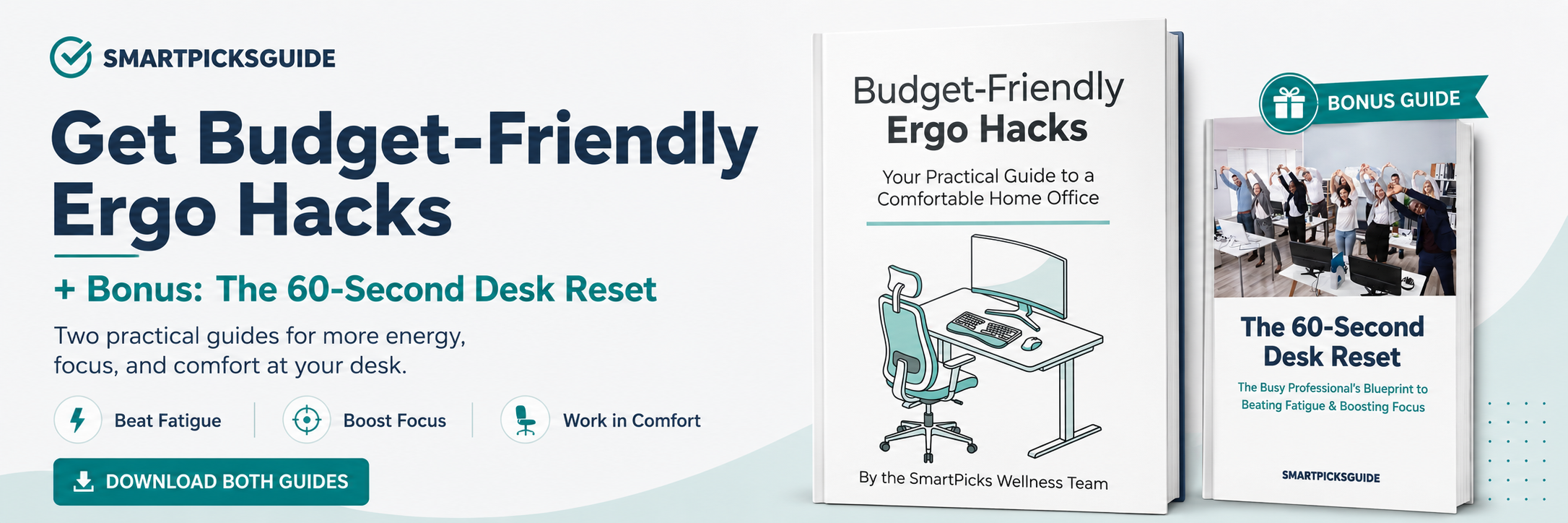
Your purchase of this guide includes free access to The 60-Second Desk Reset — a companion guide that picks up exactly where this one leaves off. While Budget-Friendly Ergo Hacks sets up your workspace to support your body correctly, The 60-Second Desk Reset gives you the daily movement routine to keep it working.
The bonus guide includes the complete 60-second movement sequence you can do every hour without leaving your desk, circulation boosters for legs and lower body, posture reset exercises targeting neck, shoulders, and lower back, and simple strategies to stay active even on your busiest days. The two guides are designed to work together — this one builds the right environment, the 60-Second Desk Reset builds the right daily habits.